
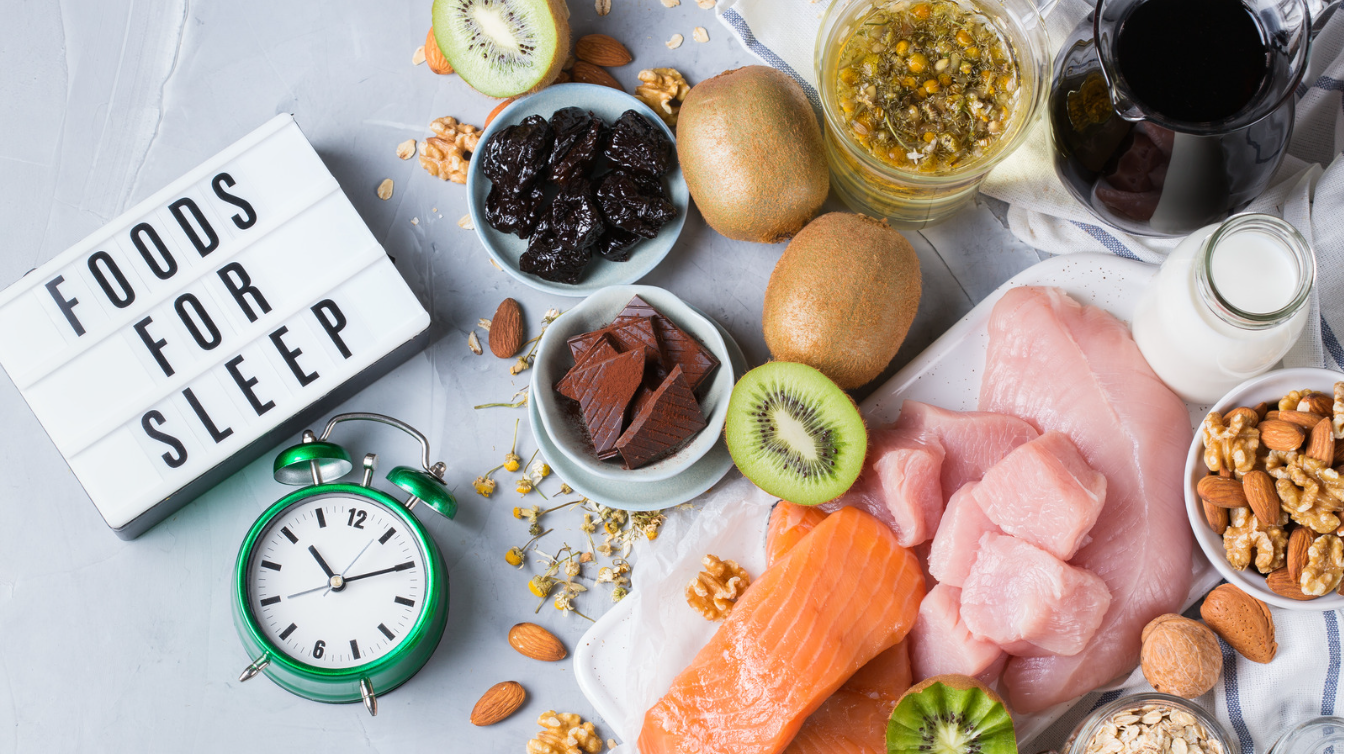
Sleep doesn’t just depend on your bedtime routine; your daytime and evening eating habits strongly influence how easily you fall asleep and how deeply you stay asleep. The connection happens through hormones, digestion, blood sugar, and even the gut microbiome.
What we eat, when we eat, and even how regularly we eat can either support restorative sleep or interfere with it.
Eating too late interferes with melatonin: Big or heavy meals close to bedtime activate digestion, which can affect melatonin release; the hormone that signals the brain it’s time to sleep. Better choice: Finish your main meal 2–3 hours before bed.
Late night blood sugar spikes and nighttime wakeups: Sugary or high-fat foods eaten late can cause spikes and drops in blood sugar, leading to restlessness and waking up frequently. Better choice: If you need a snack, choose something light and complex carb based (e.g., fruit and nuts).
Consistent eating helps set your circadian rhythm: Your internal clock responds to food just like it responds to light. Irregular meal timing confuses this rhythm. Better choice: Eat meals consistently throughout the day.
Food that Affects Sleep
- Magnesium helps relax the nervous system: Magnesium supports the parasympathetic (“rest and digest”) system. Food sources: leafy greens, avocados, bananas, beans, lentils, seeds, and nuts.
- Caffeine stays in the body for hours: Caffeine promotes wakefulness by blocking adenosine, a sleep-inducing chemical. Your afternoon coffee may still be active at bedtime, so avoid caffeine at least 8 hours before bedtime to ensure better sleep. Food sources: chocolate, black tea, soft drinks, and energy drinks.
- Alcohol disrupts deep sleep, increases nighttime awakenings, reduces REM sleep, and causes lighter less restorative sleep.
- Avoid nighttime acid reflux: Acid reflux can disrupt a person’s sleep. Eating certain foods in the evening may make acid reflux more likely. These foods include spicy foods, fried foods, high-fat foods, and junk foods. Avoiding these foods and avoiding eating in the two hours before bed may help a person avoid acid reflux at night and the poor sleep associated with it.
Nutrition won’t replace good sleep habits, but it shapes the chemistry and rhythms that allow sleep to happen. A diet rich in plant-based food, fiber, whole grains, nuts, seeds, and balanced meals supports the hormones and neurotransmitters that help us fall asleep, stay asleep, and wake restored.
Better nutrition means better sleep, and better sleep amplifies the benefits of good nutrition. This loop is at the heart of lifestyle medicine and one of the most powerful, accessible tools for improving long-term health.

Great post! I find very pertinent the acid reflux (also linked to sleep position) issue. Would be nice to see something more in the future about specific foods/liquids to avoid, and nutrition routines for acid reflex sufferers!!